
 Data Structures and Algorithms
with Object-Oriented Design Patterns in Java


 .
Using Definition
 show that
 ..
Using Definition show that
 . and
 .
Using Theorem show that
 .
 and
 .
Using Theorem show that
 .
| f(n) | g(n) |
| 10n |  |
 |  |
 |  |
 |  |
 | |
 | |
 | |
 |  |
 |  |
 |  |
 |  |
)
satisfy the identities
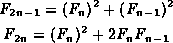
for  .


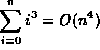
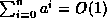 ,
where
 and
 .
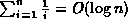 .




f (n, 10, 0);
g (n, m, k);
h (n, m, 1000000);
for (int i = 0; i < n; ++i)
    f (n, m, k);
for (int i = 0; i < e (n, 10, 100); ++i)
f (n, 10, 0);for (int i = 0; i < e (n, m, k); ++i)
f (n, 10, 0);for (int i = 0; i < n; ++i)
for (int j = i; j < n; ++j)
f (n, m, k);
class Example
{
    static int f (int n)
    {
	int sum = 0;
	for (int i = 1; i <= n; ++i)
	    sum = sum + i;
	return sum;
    }
    // ...
}).
What value does g compute?
(Express your answer as a function of n).
Give a tight, big oh expression for the worst-case
running time of the method g.
class Example
{
    // ...
    static int g (int n)
    {
	int sum = 0;
	for (int i = 1; i <= n; ++i)
	    sum = sum + i + f (i);
	return sum;
    }
}
and the method g is given in Exercise ).
What value does h compute?
(Express your answer as a function of n).
Give a tight, big oh expression for the worst-case
running time of the method h.
class Example
{
    // ...
    int h (int n)
	{ return f (n) + g (n); }
}
 Copyright © 1998 by Bruno R. Preiss, P.Eng. All rights reserved.