
 Data Structures and Algorithms
with Object-Oriented Design Patterns in Java


 .
Let
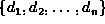 be the set of available denominations.
For example, the set
 represents the denominations
of the commonly circulated Canadian coins.
What condition(s) must the set of denominations satisfy
to ensure the greedy algorithm always finds an optimal solution?.
| i |  |  |
| 1 | 10 | 10 |
| 2 | 6 | 6 |
| 3 | 3 | 4 |
| 4 | 8 | 9 |
| 5 | 1 | 3 |
| C=18 | ||
.
Suppose we replace the queue (line 3)
with a priority queue.
,
but this time consider what happens if
we replace the queue with a LIFO stack. and ,
but this time consider a
branch-and-bound breadth-first solver.).
For some problems the solution space
is more naturally a graph rather than a tree.
to explore
a search space that is not a tree.. to explore
a search space that is not a tree..
 chess board,
find a way to place N queens on the board
in such a way that no queen can take another.
 ,
 , ...,
 ,
at depths
 ,
 , ...,
 , respectively.
Suppose the tree will be subjected to a large number
of find operations.
Let be the probability that we access key
 .
Suppose we know a priori all the access probabilities.
Then we can say that the optimal binary search tree
is the tree which minimizes the quantity

Hint:
Let  be the cost of the optimal binary search
tree that contains the set of keys
 where
 .
Show that

.
The objective is to determine how to break a given sequence of words
into lines of text of the appropriate size.
This was done either by stretching
or compressing the space between the words.
Explain why the greedy strategy always finds the optimal solution
if we stretch but do not compress the space between words. ,
and an interval [u,v]
such that p(u) and p(v) have opposite signs,
find the value r,
 , such that p(r)=0.

where  is the mean and
 is the standard deviation
of the distribution.
Hint:
Consider the central limit theorem .
 given by the probability density function

where  is the mean of the distribution.
Hint: Use the fact  ,
where Z is an exponentially distributed random variable
with mean
 .
.
 Copyright © 1998 by Bruno R. Preiss, P.Eng. All rights reserved.