Data Structures and Algorithms
with Object-Oriented Design Patterns in Java


 in the following ways:
.
 , and
 . so that it accepts expressions
written in prefix (Polish) notation.
Hint: See Exercise . to use a stack of infix expressions.
The expressions can be represented as instances of
the Str class defined in Program .
A binary operator should pop two strings from the stack
and then push a string which is formed by concatenating
the operator and its operands in the correct order.
For example,
suppose the operator is ``*''
and the two strings popped from the stack
are "(b+c)" and "a".
Then the result that gets pushed onto the stack
is the string "a*(b+c)".
so that it immediately evaluates the infix expression.
That is, create an infixCalculator method
in the style of Program .
(, ), [, ],  , i.e., S is the string of length zero,
 ,
 ,
 ,
 ).
 stacks in a single container.
The declaration of the class should look something like this:
public class MultipleStack
    implements Container
{
    public MultipleStack (int numberOfStacks);
    public void push (Object object, int whichStack);
    public Object pop (int whichStack);
    // ...
};
.,
the DequeAsArray class extends the QueueAsArray class.
This is the design paradigm known as
generalization .
The alternative paradigm is specialization
in which the QueueAsArray extends the DequeAsArray class.
Redesign the DequeAsArray and QueueAsArray
components of the class hierarchy using specialization.
and then do a breadth-first traversal of the tree
in reverse (see Exercise ).
For example, the expression 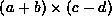 becomes
 .
Evaluate the resulting sequence from left to right using a queue
in the same way that a postfix expression is evaluated using a stack.
 Copyright © 1998 by Bruno R. Preiss, P.Eng. All rights reserved.